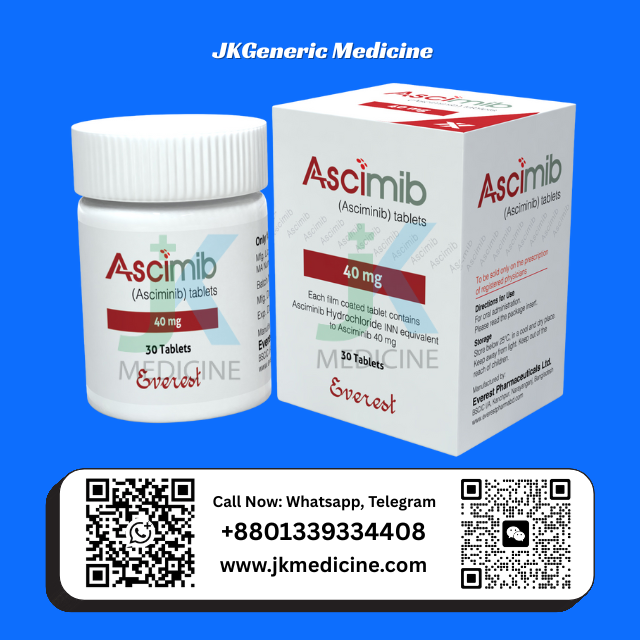
Ascimib 40 mg (Asciminib)
Ascimib 40 mg is a mix of Asciminib, a novel remedy in the setting of habitual myeloid leukemia( CML). Arising as a picky allosteric BCR- ABL1 emulsion protein asset, Asciminib is a coming- generation remedy for those who have come resistant or intolerant to current tyrosine kinase impediments( TKIs). Its medium offers the long- sought volition to cases with spare options for treatment with resistance to first- and alternate- generation TKIs.
What is Asciminib?
Asciminib is an oral treatment that's proposed for the treatment of habitual phase Philadelphia chromosome – positive habitual myeloid leukemia( Ph CML- CP). The medicine stands out since it triggers a specific inhibition of the BCR- ABL1 protein by the ABL myristoyl fund( STAMP) without affecting other kinases. This is an allosteric medium compared to the conventional ATP- competitive TKIs and is a crucial advancement in CML remedy.
Ascimib 40 mg is typically used in cases that have been exposed to two or further TKIs or carry the T315I mutation, rendering them resistant to utmost other treatments.
Mechanism of Action
Asciminib works by binding to ABL1 kinase's myristoyl fund and thereby holding the BCR- ABL1 protein in a locked- up, inactive conformation. Unlike the traditional TKIs that act on the ATP- binding point, the unique medium of action of Asciminib confers multiple advantages
Selectivity Greater selectivity for the BCR- ABL1 emulsion protein with minimum off- target conditioning.
Prostrating Resistance largely effective against mutations, including the notorious resistance T315I mutation.
lower toxin Because it's picky, Asciminib has smaller side effects compared to former- generation TKIs.
Indications
Ascimib 40 mg( Asciminib) is indicated for the treatment:
Philadelphia chromosome – positive habitual myeloid leukemia in habitual phase( Ph CML- CP)
In preliminarily treated grown-ups who were treated with two or further TKIs.
In grown-ups with the T315I mutation.
It's administered generically when other treatments have failed due to dogmatism or resistance.
Dosage and Administration
For cases without the T315I mutation 40 mg doubly daily.
For cases with the T315I mutation 200 mg doubly daily.
Administration
Ascimib tablets are for oral use, with or without refections.
The tablets are to be swallowed whole and not masticated or crushed.
Note The lozenge can be acclimated grounded on tolerability, medicine commerce, and liver or order function.
Clinical Efficacy
Asciminib has demonstrated promising efficacity in a number of clinical trials, with the most significant bone
being the phase 3 ASCEMBL trial, where it was compared with Bosutinib in cases with preliminarily treated CML- CP.
Utmost Significant ASCEMBL Trial Results
Major Molecular Response( MMR) at 24 weeks was achieved by 25 of the cases on Asciminib whereas on Bosutinib 13 of cases achieved this.
Advanced rates of sustained responses.
More tolerability and smaller expirations due to adverse events.
These findings led to its rapid-fire blessing by the U.S. FDA and other transnational nonsupervisory bodies.
Side Effects
Like all specifics, Ascimib may beget side effects, although not everyone will witness them. The most generally observed adverse effects are
Gastrointestinal Nausea, puking, diarrhea.
Hematologic effects: Thrombocytopenia, neutropenia, anemia.
Fatigue and headache
Increased pancreatic enzymes Elevated lipase and amylase.
Rash or pruritus
Increased liver enzymes( ALT, AST)
Serious Side effects May Include
Myelosuppression( especially neutropenia)
Pancreatitis
QT extension
Hypertension
Examiner nearly blood counts, liver function tests, and ECGs throughout treatment.
Drug Interactions
Ascimib 40 mg is known to have relations with some other medicines
CYP3A4 corrupters or impediments It's able of changing the tube attention of Asciminib.
Medicines that protract QT interval Use cautiously when administered together.
P- glycoprotein( P- gp) substrates Dosage adaptation may be necessary.
The case must always tell the doctor about any other medicine, supplement, or herbal product she or he's taking.
Precautions and Warnings
Gestation and Lactation gestation can not be advised on account of the threat of fetal injury. Treatment should be discontinued in breastfeeding.
Hepatic and Renal Impairment: Caution is to be used. Lozenge adaptation can be made as applicable.
Cardiac Conditions Cases with extension of QT or cardiac arrhythmias should handle it cautiously.
Storage Instructions
Store at temperatures below 30 °C( 86 °F).
Present in the original package to avoid humidity.
Keep down from children.
Benefits Over Conventional TKIs
Distinct list point assists in resistance medium prostrating.
Reduced eventuality for out- target effects, enhancing tolerability.
Active in T315I mutation, in which utmost other TKIs are ineffective.
Marketed Brand and Availability
Ascimib has colorful brand names across the globe. It comes in tablet form and has strengths of 20 mg to 40 mg and 200 mg depending on the treatment schedule. The vacuity may also vary across countries, and it generally is vended under a doctor's tradition from specialty apothecaries or oncology centers.
Conclusion
A new generation of targeted curatives for CML has surfaced, and Ascimib 40 mg( Asciminib) specifically joins this group of medicines, especially in a case with failure of conventional remedy. Its medium of action, exertion against resistant mutations, and effects safety profile make it presto- arising as an important element of CML's remedial armamentarium. Cases on Ascimib would be on close medical observation to report side effects and to achieve the stylish results on treatment.
With continued exploration and accretive long- term substantiation, Asciminib will continue to review the treatment model for CML cases worldwide.