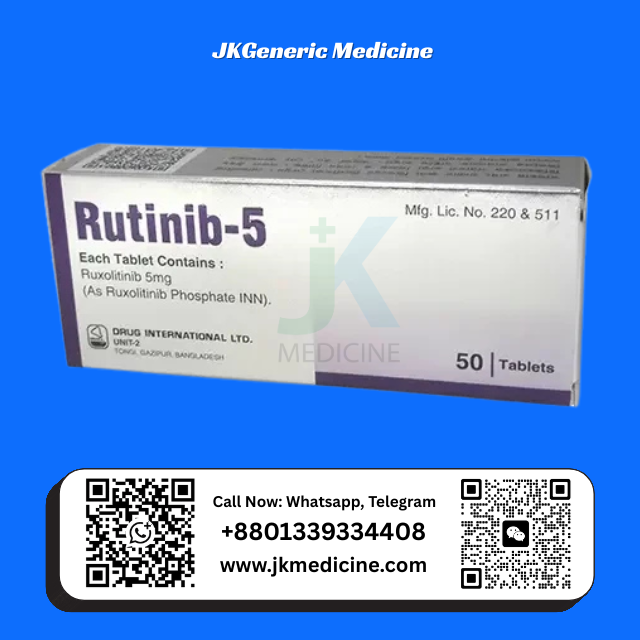
Rutinib 5 mg Tablet
Rutinib 5 mg Tablet contains Ruxolitinib. Ruxolitinib is a picky Janus kinase( JAK) asset, and it has primary use in the treatment of certain blood conditions and seditious conditions. It's an orally administered medicine that has primary use in treating complaint conditions where the vulnerable system and aberrant product of blood cells contribute to the complaint pathology. It's a great medicine for the treatment of similar conditions as myelofibrosis, polycythemia vera, and graft- versus- host complaint( GVHD).
Pharmacologic Class & Medium of Action
Ruxolitinib is a class of medicines known as JAK impediments. JAK1 and JAK2 are enzymes that form part of signaling pathways for utmost cytokines and growth factors that help in blood cell and vulnerable function. In conditions like myelofibrosis and polycythemia vera, the pathways come hyperactive, which results in unbounded product of blood cells and inflammation. Ruxolitinib blocks the action of the JAK1 and JAK2 enzymes, decelerating abnormal cell growth, lowering inflammation, and easing signs similar as blown spleen and fatigue.
Suggestions
Rutinib 5 mg Tablet is used for the treatment of
Myelofibrosis( MF)
A type of rare cancer of the bone gist in which scar towel forms in the bone gist and triggers severe anemia, fatigue, and enlarged spleen.
Ruxolitinib is specified to reduce spleen size and treat affiliated symptoms.
Polycythemia Vera( PV)
Long- term illness with an excess of red blood cells.
The cases are given ruxolitinib when they do n't tolerate or respond to hydroxyurea.
Steroid-Refractory Acute Graft- Versus- Host complaint( aGVHD)
Occurs after bone gist or stem cell transplantation.
Is given when the corticosteroids are ineffective.
Rutinib is available in oral 5 mg tablets, generally taken formerly or doubly daily, grounded on the general condition and health, weight, and blood counts of the case.
It's to be taken at the same time every day with or without food.
Dosing should be acclimated grounded on order/ liver function and laboratory tests.
Side effects
As with all specifics, Rutinib 5 mg may have side effects, but not everyone gets them. Common side goods are
Anemia and low platelet counts( thrombocytopenia)
Dizziness
Headache
Bleeding or bruising
threat of infection( e.g., herpes zoster)
Weight gain
Liver enzymes elevated
Less common but serious side effects are tuberculosis, progressive multifocal leukoencephalopathy( PML), and serious infections.
Routine blood tests are recommended to cover blood counts and liver function during remedy.
Preventives and Warnings
Infections Infection should be covered. Contact should be avoided with cases having contagious conditions.
Blood diseases CBC monitoring is routinely needed.
Liver and order Impairment Lozenge of the medicine may be modified in cases with renal or hepatic impairment.
Gestation and Breastfeeding gestation and lactation are contraindicated unless absolutely necessary, as the effect on the fetus or child is unknown.
Medicine relations With caution when administered with CYP3A4 corrupters ( like rifampin) or impediments( like ketoconazole) as they can alter the medicine's efficacity.
Storehouse Instructions
Store rutinib tablets in the room temperature( 15 °C to 30 °C) in a dry place, down from heat.
Avoid exposure to children.
Conclusion
Rutinib 5 mg( Ruxolitinib) Tablet shows an excellent remedial effect in the operation of myeloproliferative tumors and seditious conditions like GVHD. By inhibiting the JAK- STAT pathway, it manages complaint progression and improves the well- being of cases with else delicate- to- treat illness. still, as it has serious side effects, strict medical supervision needs to be maintained during the treatment process. Always follow your croaker 's guidelines on lozenge, monitoring, and life preventives during the course of this medicine.