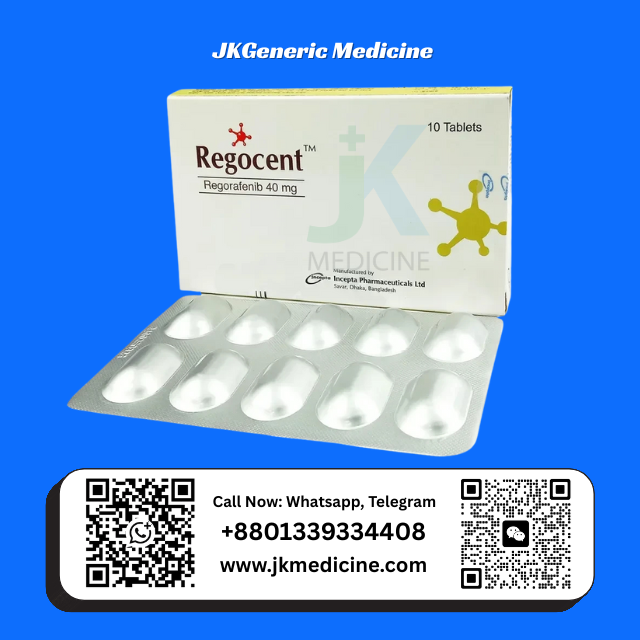
Regocent 40 mg (Regorafenib)
Regocent 40 mg is a formulation of Regorafenib, an active multikinase inhibitor used primarily for the management of various advanced or metastatic cancers. Carefully manufactured with quality, Regocent offers targeted therapy aimed at inhibiting cancer cell proliferation and tumor neovascularization, offering hope to patients with limited options. Regocent, an oral chemotherapy drug, has long been noted for its effectiveness in colorectal cancer, gastrointestinal stromal tumors (GIST), and hepatocellular carcinoma (HCC).
Composition and Formulation
40 mg of Regorafenib is the active ingredient in every Regocent tablet. The tablets are film-coated for ease of use by patients and are intended for oral administration. The active drug substance is mixed with suitable excipients to promote maximum stability, absorption, and therapeutic performance.
Mechanism of Action
Regorafenib is a multi-kinase inhibitor drug that blocks various protein kinases implicated in tumor development and progression. These kinases are implicated in angiogenesis (VEGFR1-3, TIE2), oncogenesis (KIT, RET, RAF-1, BRAF), and the tumor microenvironment (PDGFR, FGFR). Blocking these enzymes essentially stops cancer cell survival, growth, and novel blood vessel formation signals in tumors through its multi-targeted mechanism. It is specifically indicated for treating resistant cancers.
Therapeutic Indications
Regocent 40 mg is used for the treatment of the following diseases:
Metastatic Colorectal Cancer (mCRC)
In patients who have received previous fluoropyrimidine-, oxaliplatin-, and irinotecan-based therapy, anti-VEGF therapy, and anti-EGFR therapy (in RAS wild-type tumors).
Gastrointestinal Stromal Tumor (GIST)
In adult patients with advanced GIST and who have previously received imatinib and sunitinib.
Hepatocellular Carcinoma (HCC)
In patients who have previously received sorafenib.
Regocent offers a therapeutic alternative when other systemic treatment has not been effective, enhancing survival and quality of life.
Dosage and Administration
The recommended dose of Regocent is 160 mg (four 40 mg tablets) once daily for the initial 21 days of each 28-day cycle. It must be given with a low-fat meal. Dose adjustments may be required according to individual tolerance, side effects, and overall patient response. Patients should follow their oncologist's prescription and refrain from self-regulating doses.
Side Effects and Precautions
As with every targeted agent, Regocent has the ability to cause side effects. The most frequent side effects are:
Fatigue
Hypertension
Diarrhea
Palmar-plantar erythrodysesthesia (hand-foot skin reaction)
Decreased appetite
Changes in voice
Elevated liver enzymes
Severe side effects are liver toxicity, hemorrhage, gastrointestinal perforation, and myocardial infarction. Regular monitoring of liver function, blood pressure, and clinical symptoms should be performed during treatment. Unusual bleeding, extreme abdominal pain, or signs of liver failure must be reported immediately by the patient.
Warnings and Contraindications
Regocent is contra-indicated in patients with hypersensitivity to Regorafenib or any of its components. It has to be used with caution in patients with existing liver disease, cardiovascular disease, or severe impairment of renal function. Since the drug can be linked to embryo-fetal toxicity, pregnancy should be prevented during treatment and for a specific period after stopping treatment.
Drug Interactions
Regorafenib is metabolized predominantly by liver enzymes (UGT1A9 and CYP3A4). Inhibitors or inducers of these enzymes can alter levels of Regocent. Concomitant use with strong inducers of CYP3A4 (e.g., rifampin or phenytoin) or inhibitors (e.g., ketoconazole) should be avoided except where absolutely essential. The patient should inform his or her healthcare provider about all medications and supplements.
Storage and Handling
Regocent tablets should be stored at the controlled room temperature of 20°C to 25°C, away from sunlight and moisture. Keep the drug out of reach of children.
Conclusion
Regocent 40 mg (Regorafenib) is a milestone in targeted oncology, and it gives new hope to patients with advanced colorectal cancer, GIST, and HCC. Its mechanism of multi-kinase inhibition effectively suppresses tumor growth and angiogenesis and is a powerful option when other drugs are no longer effective. While it is not risk-free, monitoring and following medical recommendations carefully can help maximize benefits while cancer outcomes are improved.