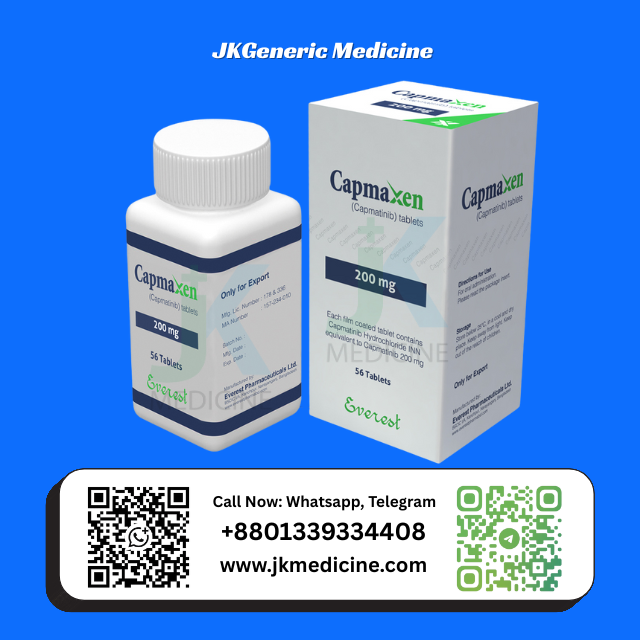
Capmaxen 200 Mg (Capmatinib)
Capmaxen 200 mg, whose active substance is Capmatinib, is a medicine used to treatnon-small cell lung cancer( NSCLC) harboring MET exon 14 skipping mutations. It belongs to the group of tyrosine kinase impediments( TKIs) and it works through the inhibition of the MET signaling pathway that tends to be hyperactive in certain types of lung cancer.
Medium of Action
Capmatinib is a picky MET asset that reaches its medium by blocking the exertion of the MET receptor tyrosine kinase, which is a protein involved in cancer cell growth, survival, and metastasis. By blocking this pathway, Capmaxen reduces excrescence growth and prevents cancer cell dispersion. The targeted medium delivers more specific remedy for MET- driven cancer cases, giving personalized treatment.
Suggestions
Capmaxen 200 mg is indicated for treatment of metastaticnon-small cell lung cancer( NSCLC) in grown-ups whose excrescences harbor MET exon 14 skipping mutations. inheritable testing must be conducted to determine the presence of this specific mutation before treatment.
Lozenge and Administration
The normal dose of Capmaxen is 400 mg daily in two divided boluses, generally two 200 mg tablets taken twice a day. Capmaxen can be taken with or without food. Cases are advised to consume the tablets whole, not crush, chew, or split.
Side effects
Like all drugs, Capmaxen may produce side effects. Side goods include
Nausea and puking
Fatigue
supplemental edema( lump of branches)
Increased liver enzymes( ALT/ AST)
Loss of appetite
Diarrhea
lower frequent but severe side effects can include interstitial lung complaint, hepatotoxicity, and photosensitivity. Nonstop monitoring of liver and lung function is recommended when the medicine is given.
Preventives and Warnings
Hepatic Impairment Use Capmaxen with caution in cases with liver impairment. Cure adaptation may be necessary.
Interstitial Lung complaint (ILD): Examiner for respiratory symptoms. Discontinue Capmaxen in case of suspected ILD or pneumonitis.
gestation and Breastfeeding: Capmaxen may beget detriment to the fetus. It isn't recommended during gestation or breastfeeding. Effective contraception should be used during treatment and for at least one week after the last cure.
Medicine relations Capmaxen may interact with other medicines metabolized by CYP enzymes. Inform your healthcare provider of all specifics being taken.
Storage and Handling
Store Capmaxen 200 mg tablets at room temperature between 25 °C and 20 °C or 77 °F and 68 °F. Store the tablets in the original packaging, kept down from humidity, and out of the reach of children.
Conclusion
Capmaxen 200 mg represents a significant advancement in MET- shifted NSCLC targeted remedy, enabling oncologists to epitomize care and ameliorate issues. As a perfection drug, it's stopgap for cases with limited remedial choices and remains a critical element in evolving cancer care models.