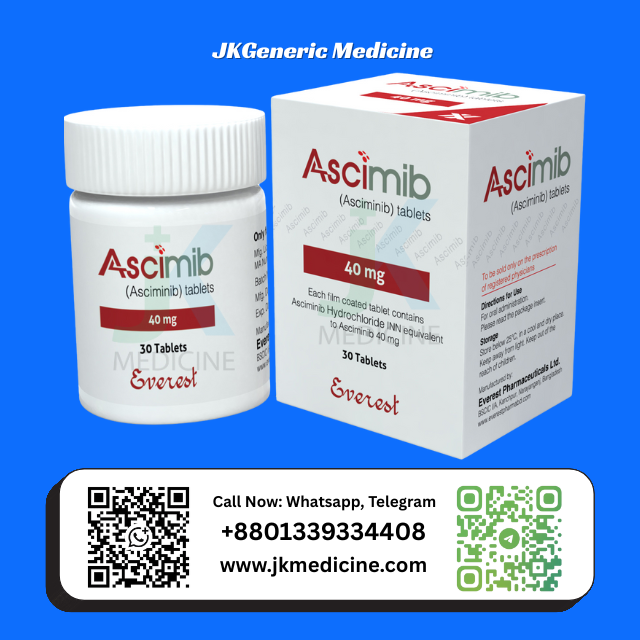
Ascimib 40 mg (Asciminib)
Ascimib 40 mg contains Asciminib, a novel, targeted drug used in the treatment of Philadelphia chromosome-positive chronic myeloid leukemia (Ph+ CML) in adult patients. Specifically developed for those who are already resistant to two or more tyrosine kinase inhibitors (TKIs), Ascimib is a novel class of treatment that offers optimism to patients with resistant or intolerant CML.
Mechanism of Action
Asciminib is a first-in-class STI571-independent BCR-ABL1 inhibitor that has a distinctive bind to the ABL myristoyl pocket and is thus a STAMP inhibitor (Specifically Targeting the ABL Myristoyl Pocket). Through inhibition at a location other than that of other TKIs, Asciminib can circumvent resistance caused by mutations within the ATP-binding site of the BCR-ABL1 enzyme. This is especially beneficial in patients who are no longer sensitive to other TKIs like imatinib, dasatinib, or nilotinib.
Indications
Ascimib 40 mg is indicated for:
Adult patients with Ph+ CML in chronic phase, who have been previously treated with two or more TKIs.
Patients with T315I mutation-positive Ph+ CML in chronic phase, for whom there are limited alternative treatments.
Dosage and Administration
The recommended dose is 40 mg twice daily, approximately 12 hours apart, with or without food. The tablets should be swallowed whole with water and not crushed, chewed, or split. Dosing may be individualized based on patient response, tolerance, or even suspected drug interactions.
Key Benefits
Targeted Precision: Acts specifically on the ABL myristoyl pocket, which allows it to overcome resistance mechanisms.
Fewer Off-Target Effects: Compared to traditional TKIs, selective binding of Asciminib reduces undesirable activity against other kinases, improving tolerability.
Activity in Resistant Patients: Offers clinical benefits even in patients who have failed multiple prior therapies.
Oral Route of Administration: Twice-daily oral dosing is convenient and favors better patient compliance.
Side Effects and Precautions
Potential common side effects are:
Fatigue
Nausea
Headache
Diarrhea
Increased pancreatic enzyme levels
Serious but uncommon side effects may include myelosuppression, hypertension, liver enzyme elevation, and pancreatitis. Regular monitoring of blood counts, liver function, and lipase/amylase levels is advised while on treatment.
Asciminib should be used with caution in those who already have liver or pancreatic disease. It is not recommended in pregnancy and lactation unless a doctor thinks it is necessary.
Drug Interactions
Asciminib may interact with CYP3A4 inhibitors or inducers, substrates of P-glycoprotein and acid-reducing agents. Carefully review all medications and supplements with a health care provider prior to initiating treatment.
Storage Instructions
Store Ascimib tablets at room temperature (20°C–25°C) in the original package, protected from moisture and light. Out of the reach of children.
Disclaimer
This is an informational description only and does not replace medical diagnosis and treatment. Always consult your health care provider for diagnosis and treatment.