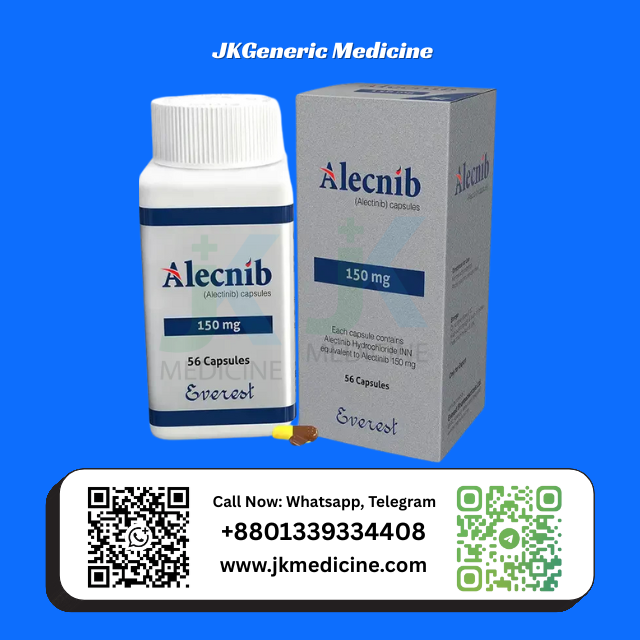
Alectinib 150 Mg (Alectinib)
Alecnib 150 mg, containing Alectinib as the active medicine, is an anticancer drug which specifically targetsnon-small cell lung cancer( NSCLC) that's ALK-positive( anaplastic carcinoma kinase-positive). Alectinib is a tyrosine kinase asset( TKI), whose medium of action is inhibiting the defective proteins responsible for causing cancer cells to grow and multiply uncontrollably. It falls under the order of perfection oncology, with targeted remedy according to inheritable labels.
Composition and Packaging
Alectinib 150 mg capsules have Alectinib hydrochloride of exertion original to 150 mg base of Alectinib. It's generally available in capsule form for oral administration. It's typically packed in bottles or fester packs, where capsules are counted by lozenge rules as specified by healthcare professionals.
Medium of Action
Alectinib functions by widely suppressing ALK and RET tyrosine kinase exertion. In ALK-positive NSCLC, there's inheritable rearrangement leading to an aberrant ALK emulsion protein, which promotes unbridled cell growth. Alectinib suppresses phosphorylation and activation of downstream signaling pathways after it binds to the aberrant kinase, eventually blocking excrescence growth and converting death of cancer cells.
Alectinib has demonstrated robust exertion against mutations of resistance to ALK and is able of crossing the blood- brain hedge, making it effective in the treatment of brain metastases, a common complication of ALK-positive NSCLC.
Suggestions
Alecnib 150 mg is used for
original treatment of metastatic NSCLC that's positive for ALK
Treatment of cases with metastatic ALK-positive NSCLC who have formerly been treated with crizotinib or are intolerant to crizotinib
Its use is grounded on inheritable testing to confirm the presence of ALK rearrangements.
Lozenge and Administration
The typical cure is 600 mg( four capsules of 150 mg) doubly daily, with food for enhancing immersion. The lozenge for diurnal consumption is 1200 mg, and it should be taken formerly a day at the same time. Capsules should n't be opened or masticated.
Lozenge adaptations should be grounded on the case's forbearance, frequence of adverse effects, or hepatic/ renal function.
Side effects
The usual side effects of Alecnib 150 mg are
Fatigue
Constipation
lump( edema)
Muscle pain( myalgia)
Anemia
Increased liver enzymes( ALT/ AST)
Increased creatine phosphokinase( CPK)
Rare and serious adverse effects may be
Interstitial lung complaint( ILD) or pneumonitis
Hepatotoxicity
Bradycardia
Rhabdomyolysis or severe myalgia
Muscle breakdown
Monitoring of liver function tests, CPK situations, and ECGs should be routine during treatment.
Preventives and Warnings
Gestation and Lactation Alecnib is teratogenic. It must n't be used with gestation or lactation.
Medicine relations Use with caution in the presence of CYP3A impediments or corrupters because these affect Alectinib metabolism.
Driving and Operating Machinery Dizziness and asthenia can vitiate the case's capability to perform a task taking alertness.
Clinical efficacity
Clinical studies like ALEX and ALUR have proven that Alectinib significantly improves progression-free survival( PFS) compared to crizotinib in cases with ALK-positive NSCLC. It also reduces the threat of CNS progression, and so it's a medicine of choice as a first line of treatment.
Storehouse
Keep Alecnib capsules at room temperature( 20 °C to 25 °C), defended from light and humidity. unobtainable by children.
Conclusion
Alecnib 150 mg is a strong, targeted remedy that has revolutionized the treatment of ALK-positive NSCLC. With bettered efficacity for both systemic and CNS complaint and an respectable safety profile, it offers cases with this specific type of lung cancer stopgap and bettered issues. still, its delivery should always be under the care of an educated oncologist, with conservative monitoring to manage side goods and optimize treatment benefit.