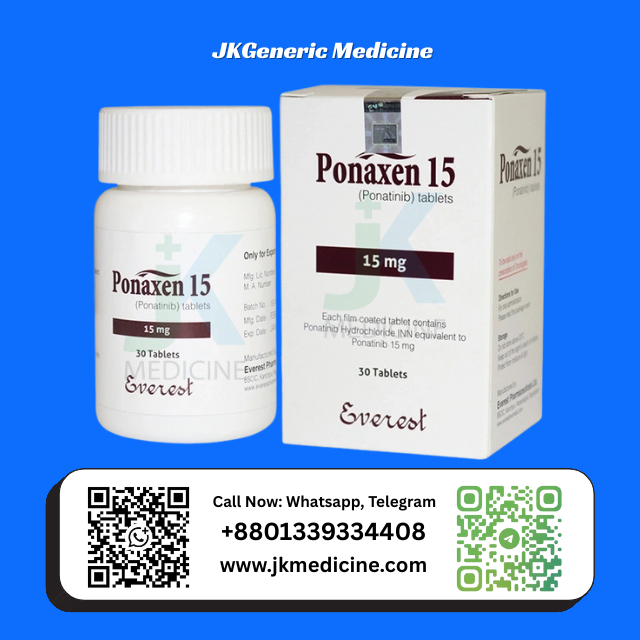
Ponaxen 15 Mg (Ponatinib)
Ponaxen 15 mg is a drug that contains Ponatinib, a potent tyrosine kinase asset( TKI) which is used generally in the treatment of some leukemias. It's largely effective in targeting leukemic cells that carry mutations resistant to first and alternate- generation TKIs. Manufactured by estimable pharmaceutical companies, Ponaxen is primarily employed in oncology in cases who have limited treatment options, which include those with the T315I mutation or medicine- resistant habitual Acute lymphoblastic leukemia (ALL) and myeloid leukemia (CML).
Active Ingredient and Strength
The 15 mg of ponatinib hydrochloride found in each Ponaxen pill prevents certain aberrant proteins from exerting their force, which encourages the growth of cancer cells. Ponatinib is veritably effective in blocking the exertion of BCR- ABL tyrosine kinase, indeed those resistant to treatment else.
Indications
Ponaxen is recommended for treating:
habitual Myeloid Leukemia( CML)
Habitual Phase( CP- CML)
Accelerated Phase( AP- CML)
Blast Phase( BP- CML) especially in those cases that are resistant or intolerant to previous TKI remedy or have the T315I mutation.
Philadelphia chromosome-positive acute lymphoblastic leukemia (Ph each)
In adult cases with complaint that's resistant or intolerant to previous TKIs or has the T315I mutation.
Mechanism of Action
Ponatinib is amulti-targeted TKI, but its main exertion is directed against the BCR- ABL emulsion protein of CML and Ph ALL. Ponatinib affects BCR-ABL's ATP-binding site, which is why it works on drug-resistant T315I mutant forms of the enzyme. Inhibiting this kinase exertion, Ponaxen blocks cancer cell growth and induces their apoptosis( programmed cell death).
Also, Ponatinib isn't only an asset of BCR- ABL but also of other kinases like VEGFR, FGFR, PDGFR, and SRC, which may play a part in its broaderanti-cancer exertion but its side- effect profile as well.
Dosage and Administration
The original dose of Ponaxen should be 15 mg orally formerly daily, but the dose can be modified grounded on the case's response and forbearance.
It should be taken at the same time daily and with or without food.
Reduction or termination of the cure do may be needed by severe side effects or laboratory abnormalities.
Cases can not arbitrarily modify the cure or stop the medicine because it isn't applicable to do so without consulting the oncologist first.
Side Effects
While Ponaxen is a good treatment, it has several side effects, some of which may be dangerous. The most common side goods are:
Hypertension (high blood pressure)
Seborrheic rash
Fatigue
Abdominal discomfort
Constipation
Nausea
Headache
Dry skin
Arthralgia
Severe side effects can correspond more importantly:
Arterial occlusive occurrences( e.g., heart attack, stroke)
Blood clots
Liver toxin
Pancreatitis
Myelosuppression( dropped blood counts)
Heart failure
Regular monitoring is needed to detect and manage these adverse events beforehand.
Warnings and Precautions
Risk for Heart Disease Ponaxen has a black box warning about blood clots and serious arterial thrombosis. It should be used cautiously in cases with cardiovascular complaint or threat factors.
Liver Function: Liver enzymes must be covered regularly as hepatotoxicity is an established threat.
Monitoring of Blood Pressure. Hypertension is common and must be laboriously managed.
Pancreatitis Abdominal pain cases must be estimated instantly.
The growing fetus may suffer harm from ponatinib during pregnancy and lactation. Use is to be avoided during gestation and lactation.
Drug Interactions
Ponaxen interacts with a broad diapason of medicines, especially those that act upon the CYP3A4 enzyme system, including
Strong CYP3A4 impediments (e.g., ketoconazole, clarithromycin)
CYP3A4 corrupters (e.g., rifampin, phenytoin)
Anticoagulant and antiplatelet drug
Talk to your doctor about all specifics and supplements to avoid dangerous relations.
Storage Instructions
Ponaxen medication should be kept between 20 and 25 degree Celsius at a comfortable temperature.
Keep medicine in its original packaging, down from humidity and light.
Down from children.
Ponaxen 15 mg (Ponatinib) is a significant remedial medicine for the operation of cases with refractory CML and Ph ALL, particularly those with the T315I mutation. Its potentanti-leukemic exertion brings stopgap when other treatments have failed. Still, due to its adverse side effects, the medicine has to be used with caution, nearly covered, and constantly under medical observation.