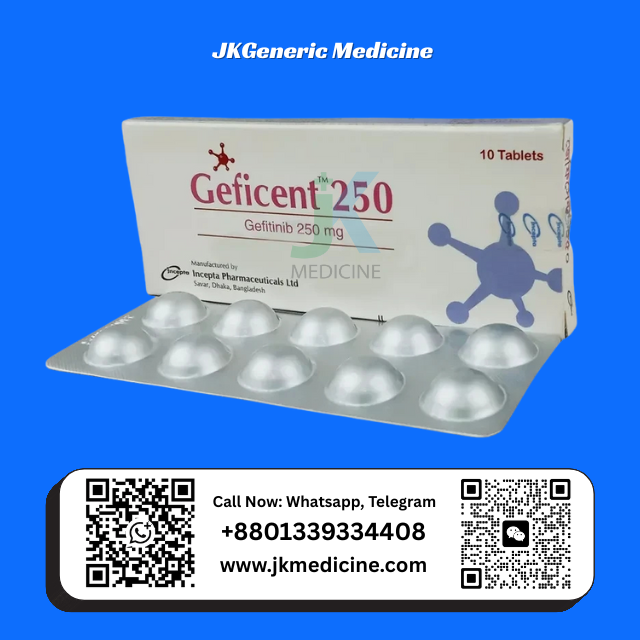
Geficent 250 mg (Gefitinib)
Geficent 250 mg contains Gefitinib, a prescription drug used mainly to treat certain types of non-small cell lung cancer (NSCLC). It’s part of a group called tyrosine kinase inhibitors—these drugs go after the epidermal growth factor receptor (EGFR). By blocking this receptor, Gefitinib slows down or stops cancer cells from growing and spreading. It’s a more targeted way to fight lung cancer, aiming right at the problem without hitting everything else along the way.
How Geficent Works
Gefitinib does its job by locking onto the EGFR tyrosine kinase, a protein that tells cells when to grow and survive. In lots of cancer cells, EGFR is cranked up or mutated, which means the cells just keep multiplying. Gefitinib blocks these signals, which slows down tumor growth and can even kill cancer cells or shrink tumors over time. Because it’s targeted, it usually leaves healthy cells alone, so you don’t get the same level of collateral damage you see with classic chemotherapy.
Who Gets Geficent
Doctors prescribe Geficent 250 mg for people with locally advanced or metastatic NSCLC, especially when the cancer has certain EGFR mutations. You need specific testing before starting—otherwise, it might not work as intended. Doctors use it as a first-line treatment if you have EGFR-positive NSCLC, for folks who can’t handle standard chemo, or when other treatments aren’t working anymore.
How to Take It
The normal dose is 250 mg by mouth once a day. You should take it on an empty stomach—at least an hour before or two hours after eating. Try to take it at the same time every day to keep the drug level steady in your system. Swallow the tablet whole with water (don’t chew or crush it). If you have side effects or liver problems, your doctor might tweak the dose.
How Your Body Handles Gefitinib
After you take it, Gefitinib gets absorbed pretty well and hits its highest blood level in about 3 to 7 hours. The liver does most of the heavy lifting when it comes to breaking it down, using enzymes called CYP3A4 and CYP2D6. Most of the drug leaves your body in your poop, not your urine. With a half-life of about 48 hours, once-a-day dosing works fine. If you have liver or kidney issues, your doctor will keep a closer eye on you and might adjust your dose.
How Well It Works
Clinical studies show that Gefitinib helps people with EGFR-mutated NSCLC live longer without their cancer getting worse, compared to regular chemo. The best results show up in patients with common EGFR mutations like exon 19 deletions or exon 21 L858R substitutions. Many patients also feel better overall—less coughing, easier breathing, and an improved quality of life.
Side Effects—What to Watch For
Most people tolerate Geficent pretty well, but it can cause side effects. The most common ones are:
Skin problems: rash, acne, dry or itchy skin
Stomach issues: diarrhea, nausea, vomiting, loss of appetite
Feeling tired or weak
Rarely, serious problems happen—things like interstitial lung disease (ILD), major liver trouble, or eye issues. If you suddenly have trouble breathing, a nonstop cough, or notice your skin or eyes turning yellow, get medical help right away. Your doctor will probably want to check your liver and lungs regularly while you’re on this medication.
Interactions With Other Drugs
Gefitinib can bump heads with other medicines, especially those that change how your liver works (CYP3A4 and CYP2D6). Drugs like rifampicin or phenytoin can lower Gefitinib levels, making it less effective. Others, like ketoconazole, can boost its levels and raise the risk of side effects. Always tell your doctor about every medication and supplement you’re taking before you start Geficent.
Important Precautions
Pregnancy and breastfeeding: Avoid Gefitinib unless there’s no other choice, since it can harm the baby.
Liver or lung problems: You’ll need extra monitoring.
Smoking: This makes Gefitinib less effective.
Bottom Line
Geficent 250 mg (Gefitinib) has changed the game when it comes to treating non-small cell lung cancer, especially for people with certain EGFR mutations. It targets tumors more precisely and usually causes fewer side effects than old-school chemotherapy. Taking the right dose, sticking to your schedule, and regular check-ups all matter if you want the best results. With careful use, Geficent can help people with NSCLC feel better and live longer—it’s a key tool in modern cancer care.