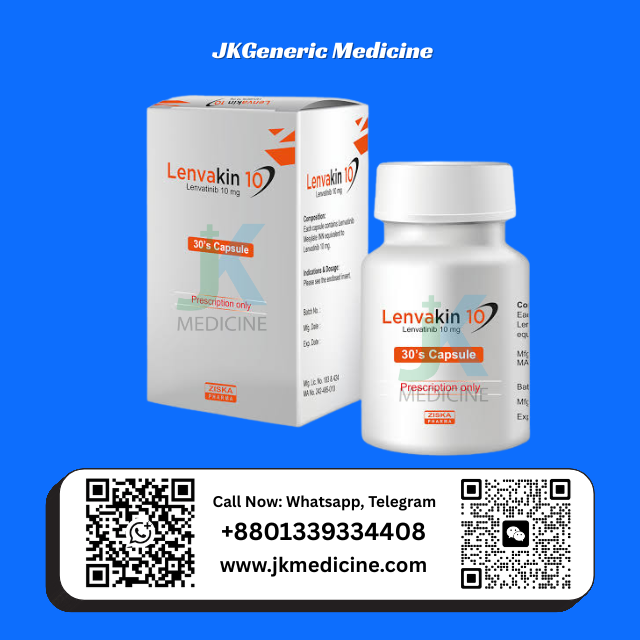
Lenvatinib 10 mg (Lenvima)
Lenvatinib 10 mg, also known by the brand name Lenvima, is an oral targeted cancer remedy primarily used to treat certain types of cancers. It's a class of medicines known as tyrosine kinase impediments (TKIs) and functions to block certain proteins that sustain the growth and survival of cancer cells. Produced by Eisai Inc., Lenvatinib has been approved for use in colorful countries to treat similar conditions as thyroid cancer, hepatocellular melanoma (HCC), and renal cell melanoma( RCC), among others.
Mechanism of Action
Lenvatinib blocks colorful receptor tyrosine kinases (RTKs) involved in excrescence growth and angiogenesis (conformation of new blood vessels which supply excrescences). It acts specifically on the following
VEGFR 1 – 3 (Vascular Endothelial Growth Factor Receptors)
FGFR 1 – 4 (Fibroblast Growth Factor Receptors)
PDGFRα (Platelet- deduced Growth Factor Receptor nascence)
RET (Rearranged during Transfection)
tackle (Stem Cell Factor Receptor)
Through these receptor inhibitions, Lenvatinib bisects the signaling pathways that nourish excrescence growth and metastasis, basically depriving the excrescence of its blood force and halting cancer growth.
Indications
Lenvima 10 mg is indicated alone or in combination with other medicines for the treatment of multiple cancers discerned Thyroid Cancer( DTC)
For radioactive iodine-refractory DTC cases, Lenvatinib is an effective remedy.
It's used when the cancer is no longer responsive to standard iodine remedy.
Hepatocellular Carcinoma (HCC)
Used as a first- line for unresectable HCC, one of the most common liver cancer.
It has been shown to be inversely effective to sorafenib with different side- effect biographies.
Renal Cell Melanoma( RCC)
In association with everolimus, Lenvatinib is used in advanced RCC cases who have preliminarily enteredanti-angiogenic remedy.
It's also combined with pembrolizumab as first- line treatment for metastatic RCC.
Endometrial Melanoma
Lenvatinib, in combination with pembrolizumab (ananti-PD-1 checkpoint asset), is used for advanced endometrial melanoma that can not be treated with restorative surgery or radiation.
Dosage and Administration
Lenvima lozenge varies grounded on the type of cancer and single- agent vs. combination remedy.
For monotherapy (e.g., thyroid melanoma), the original dose is 24 mg formerly daily, to be titrated.
With combination remedy, e.g., with everolimus or pembrolizumab, the dose is generally 20 mg daily.
The 10 mg tablets are a accessible strength to titrate up to the outside cure or in those who bear dose reduction due to adverse effects.
Tablets should be taken formerly a day with or without food at the same time each day.
Side Effects
Like other cancer remedy, Lenvatinib isn't without side effects. Among the most common are
Hypertension (high blood pressure)
Fatigue
Diarrhea
dropped appetite
Weight loss
Proteinuria (protein in the urine)
Stomatitis (inflammation of the mouth)
More severe but less common side effects are
Cardiac dysfunction
Liver impairment
Hemorrhagic events
Arterial thromboembolic events
Monitoring of blood pressure, liver and renal function, and electrolytes should be carried out regularly during treatment.
Warnings and Precautions
Precisely cover cases for
Cardiovascular toxin especially in those with former heart complaint or hypertension.
Bleeding toxin especially in cases with invasive excrescences into blood vessels.
Renal and liver function Impairment may bear cure adaptation or interruption.
Gastrointestinal perforations or fistulas
QT extension of the interval. Monitoring of the ECG is needed.
Pregnant women shouldn't take Lenvatinib as it causes fetal damage. Effective contraception should be employed during and for at least one month following treatment.
Drug Interactions
Lenvatinib undergoesnon-CYP metabolism and isn't likely to beget CYP medicine relations. Preventives are nevertheless advised when concurrent remedy is administered that has the implicit to affect blood pressure or renal function.
Clinical Efficacy
Clinical efficacity has been demonstrated in studies with Lenvatinib
In radioactive iodine refractory DTC, Lenvatinib increased progression-free survival compared with placebo significantly.
In HCC, in the REFLECT trial, Lenvatinib was shown to benon-inferior to sorafenib in terms of overall survival.
In RCC, pembrolizumab combination has yielded advanced response rates and longer progression-free survival than conventional curatives.
Conclusion
Lenvatinib 10 mg (Lenvima) is a potent oral tyrosine kinase asset with broad exertion against utmost types of advanced cancer. It represents a significant advance in targeted cancer remedy, especially for cases with limited options. Though of great clinical benefit, administration of Lenvima should be precisely covered to avert side effects and optimize outgrowth. Case monitoring and education are critical to effective remedy with Lenvima.